Horizontal Heavens
Observatory
"...From A Galaxy Far, Far
Away"
Clear Sky Chart

This page was last updated on 06/22/16.
Horizontal Heavens
Observatory
"...From A Galaxy Far, Far
Away"
|
|
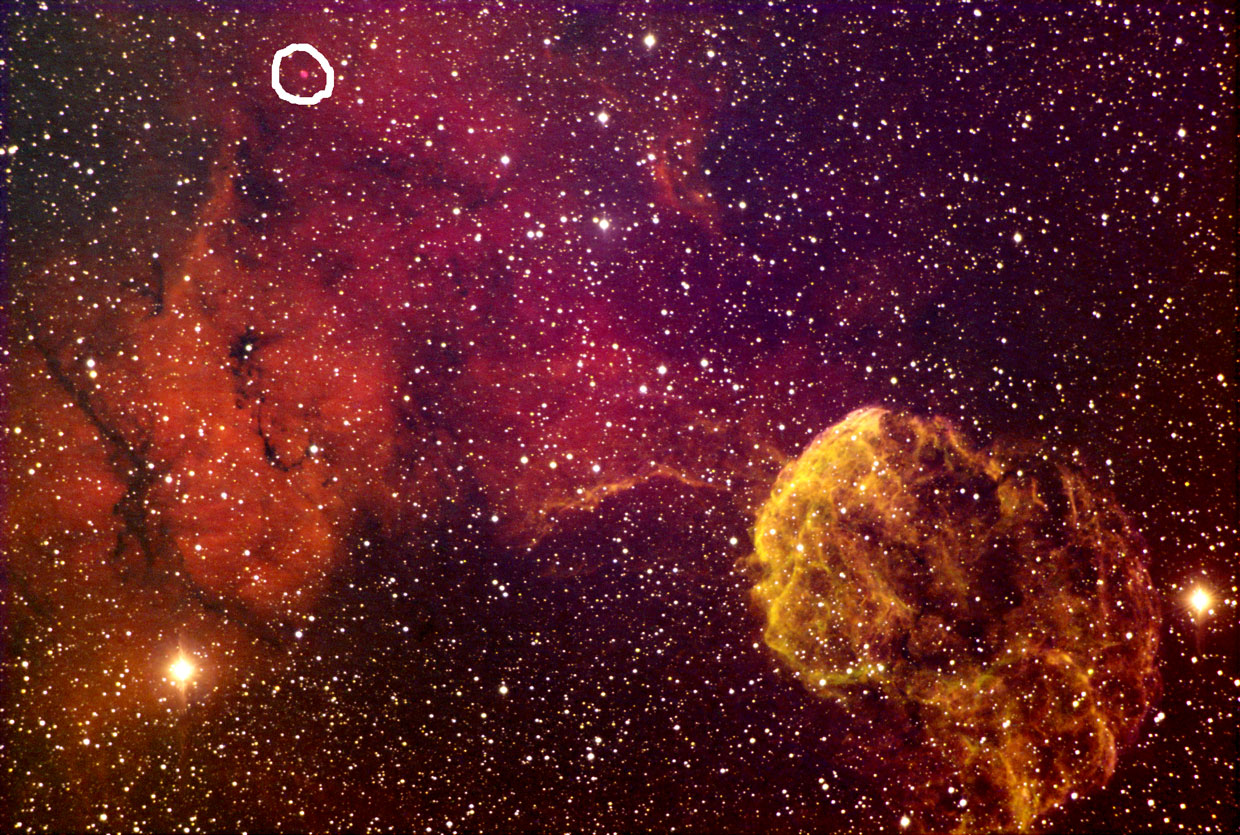
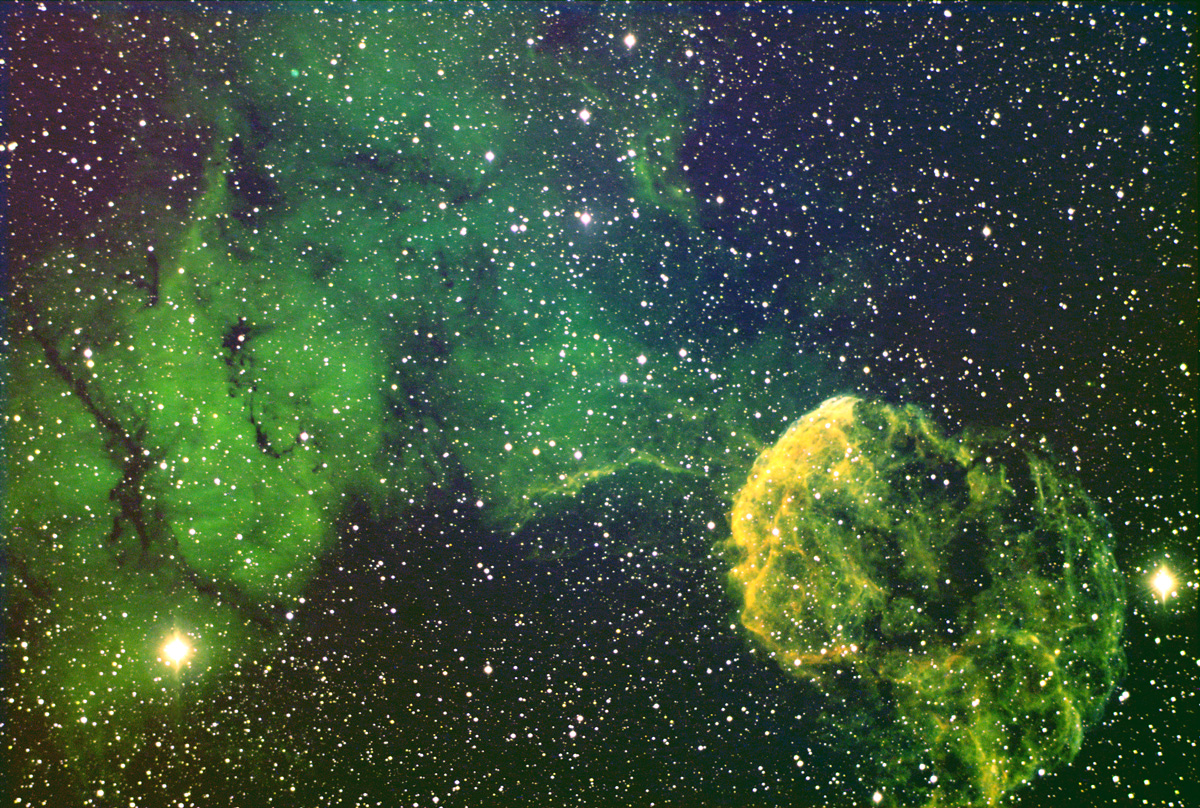
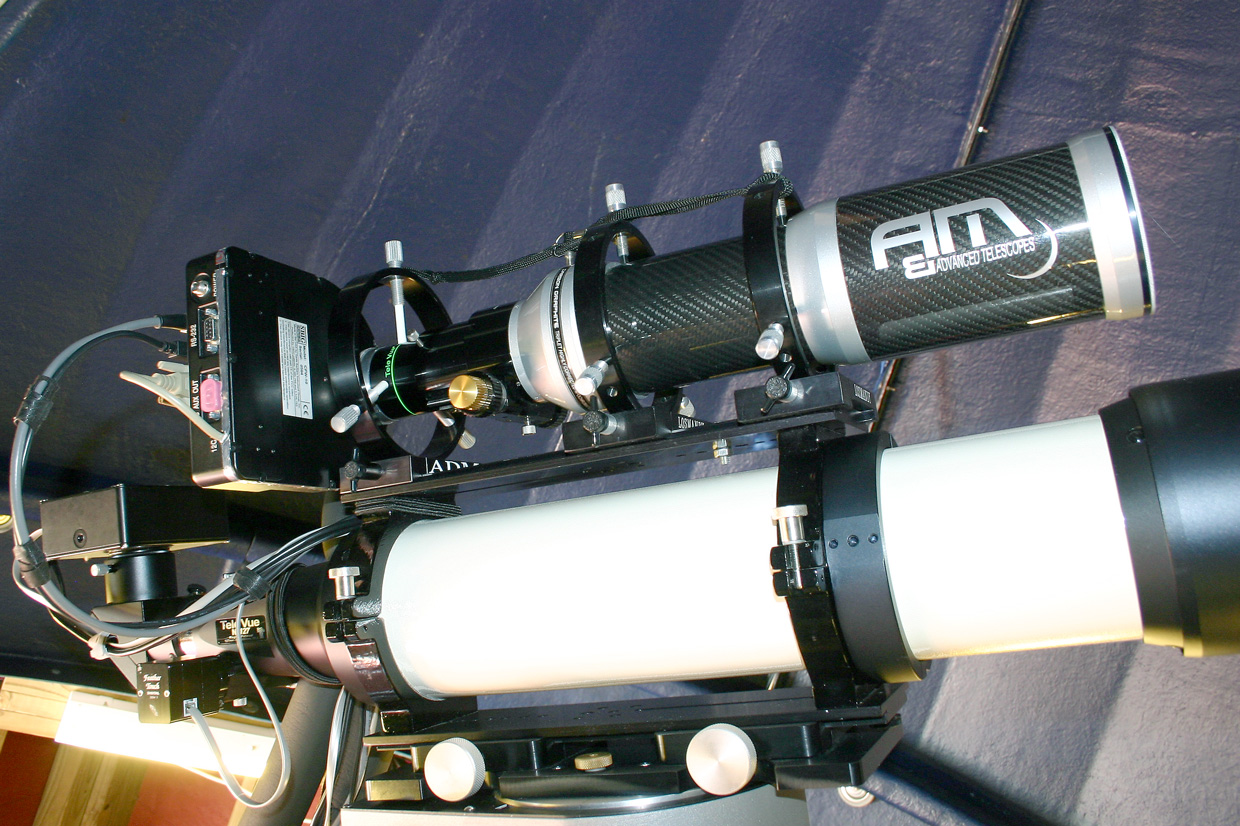
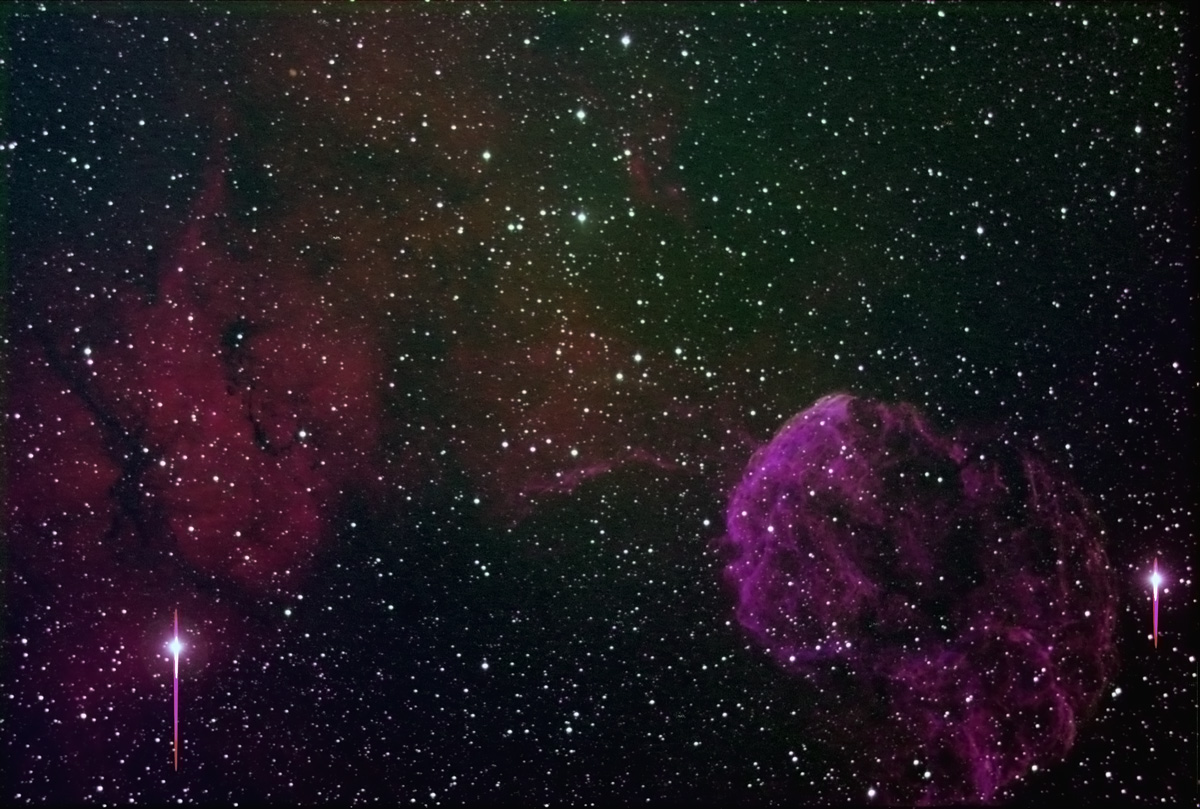
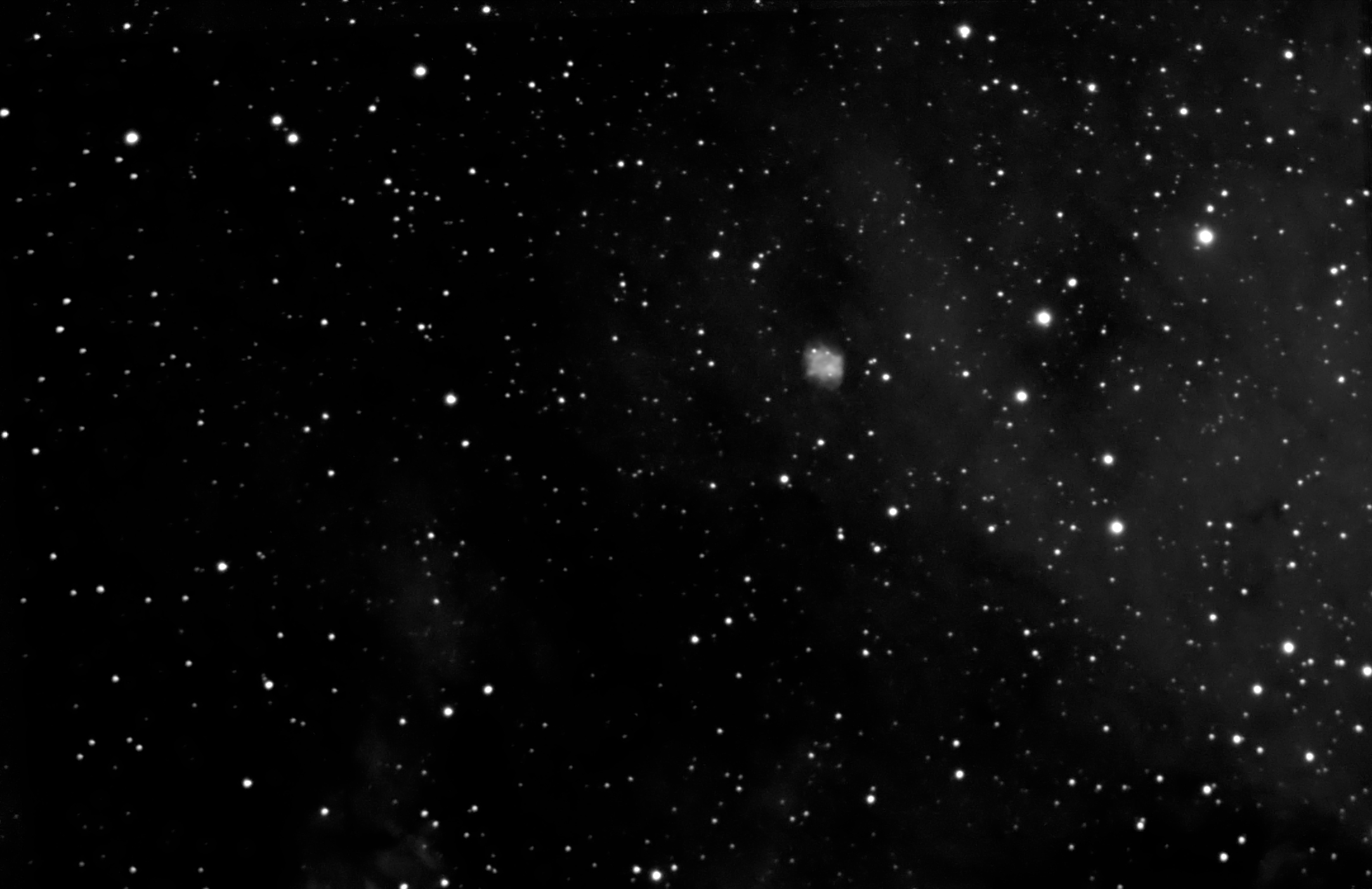
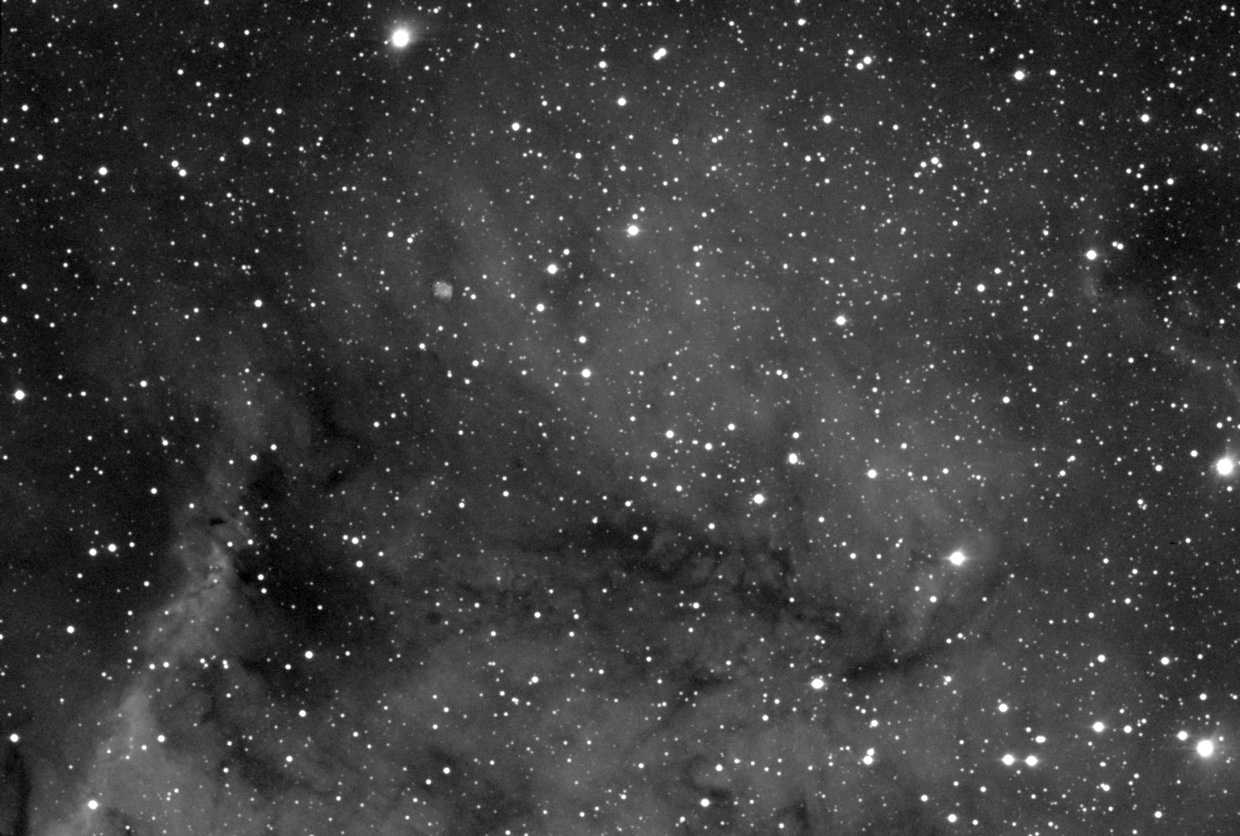
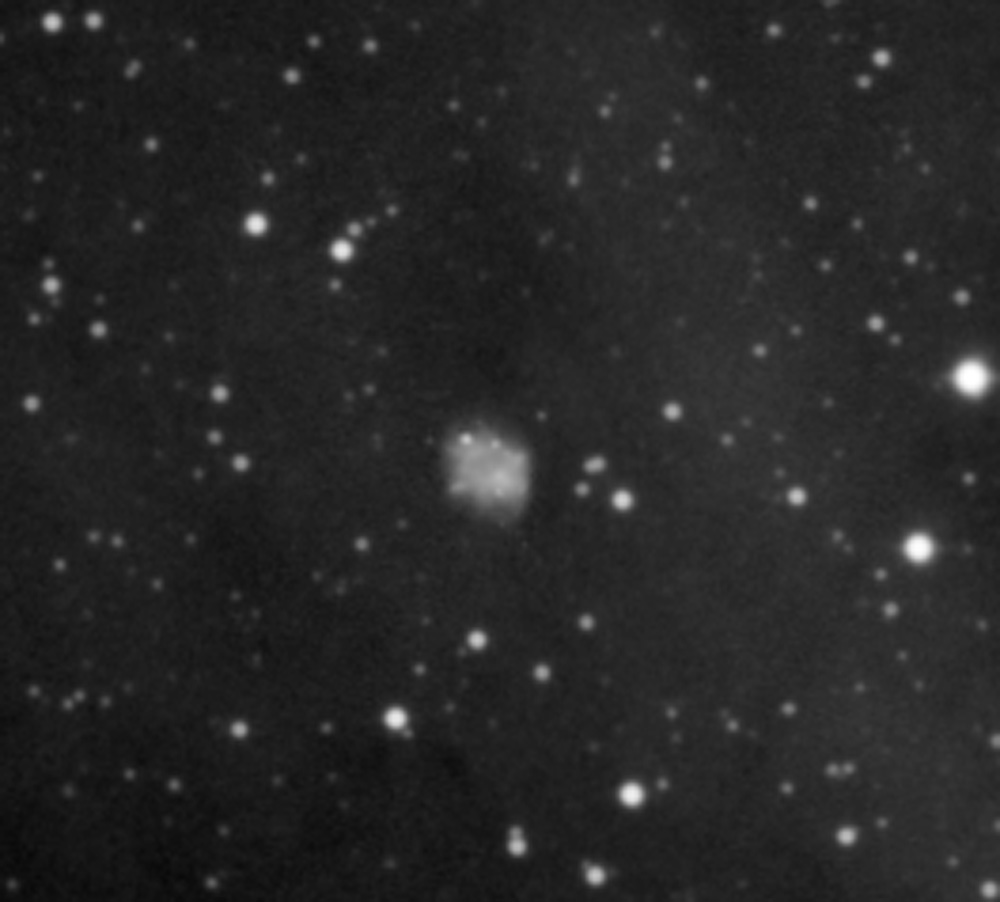
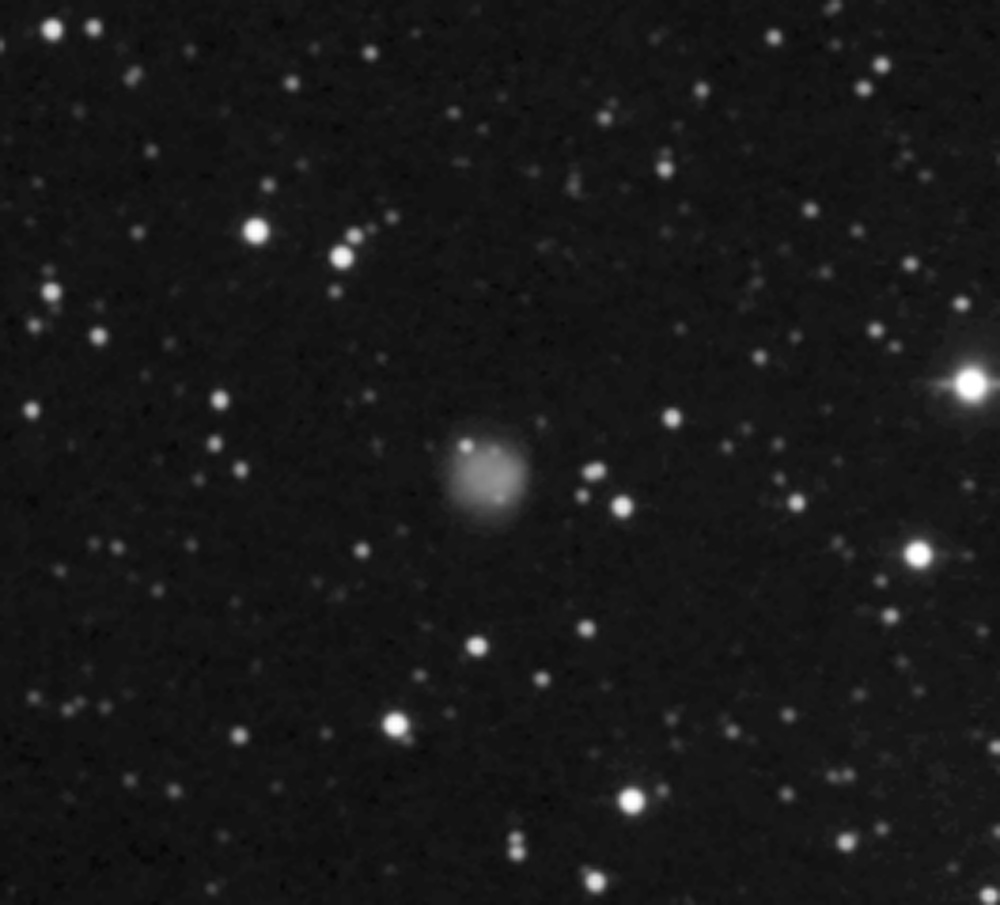
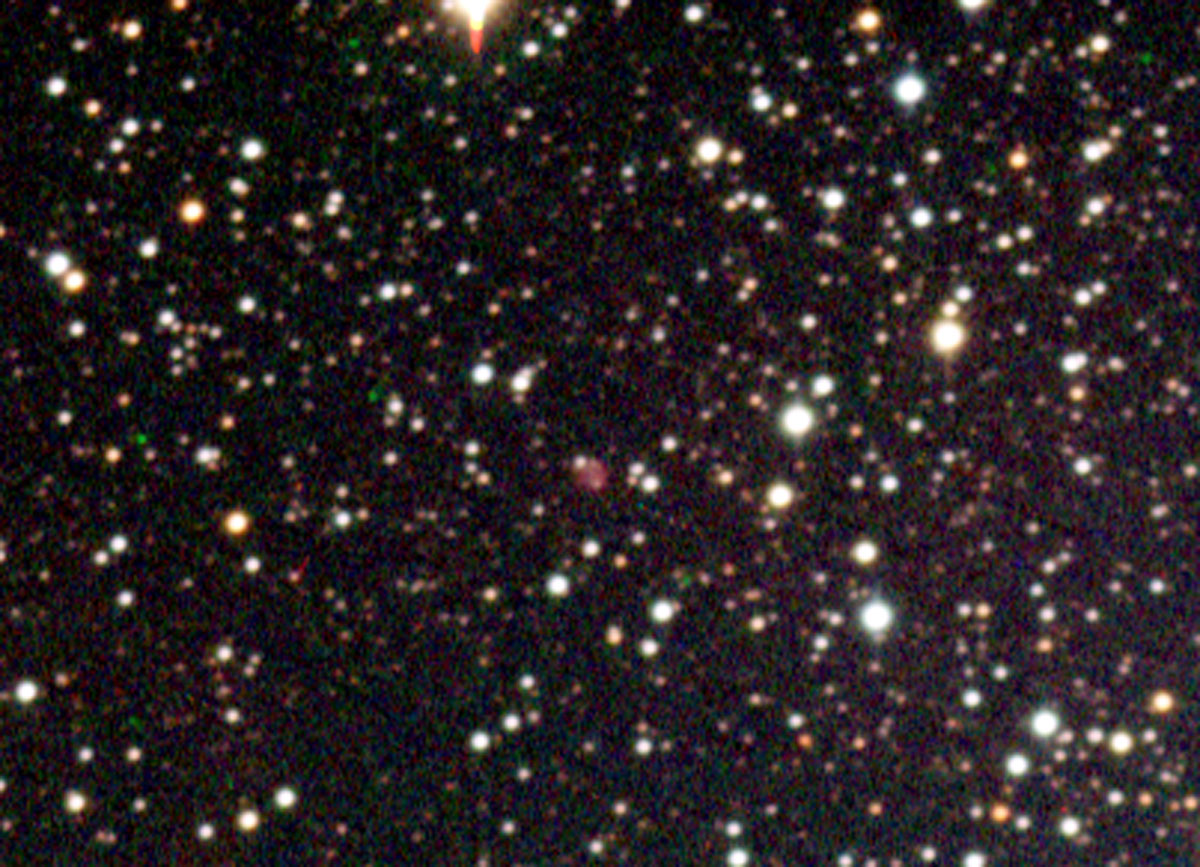
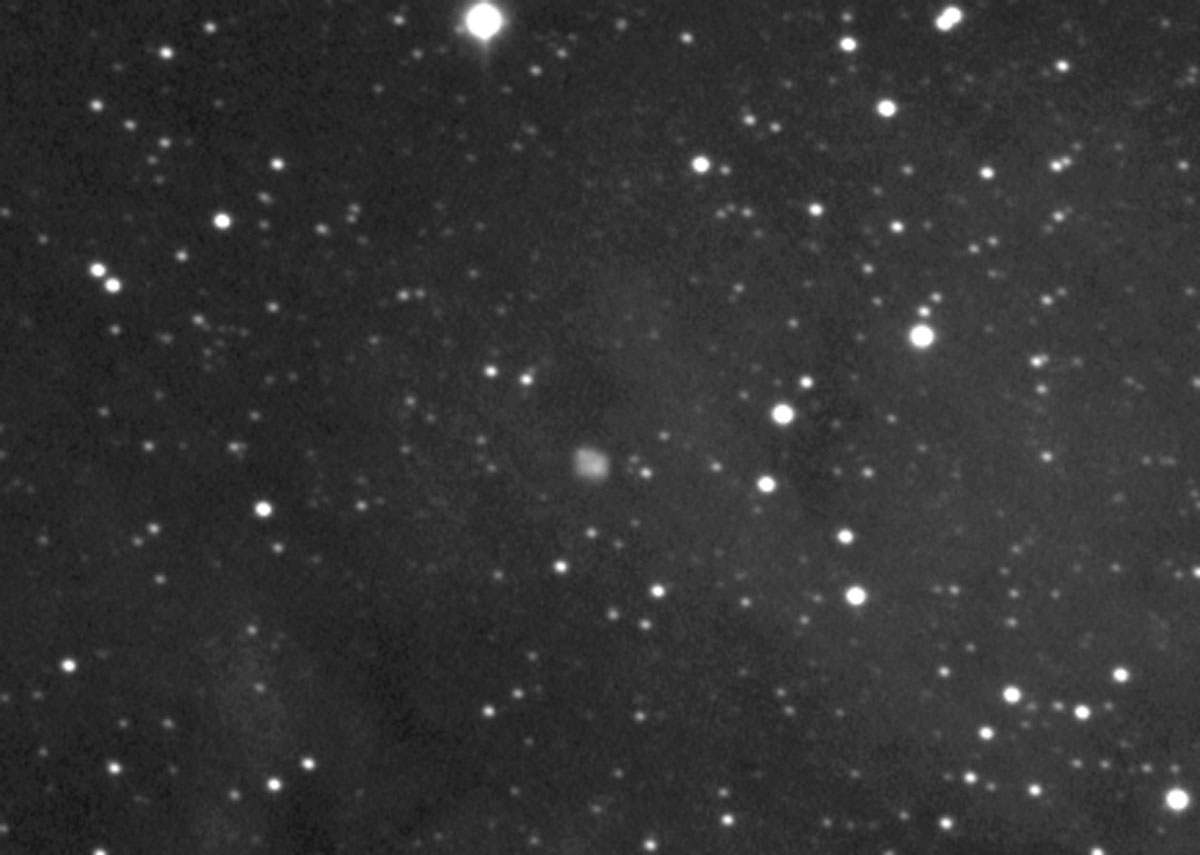
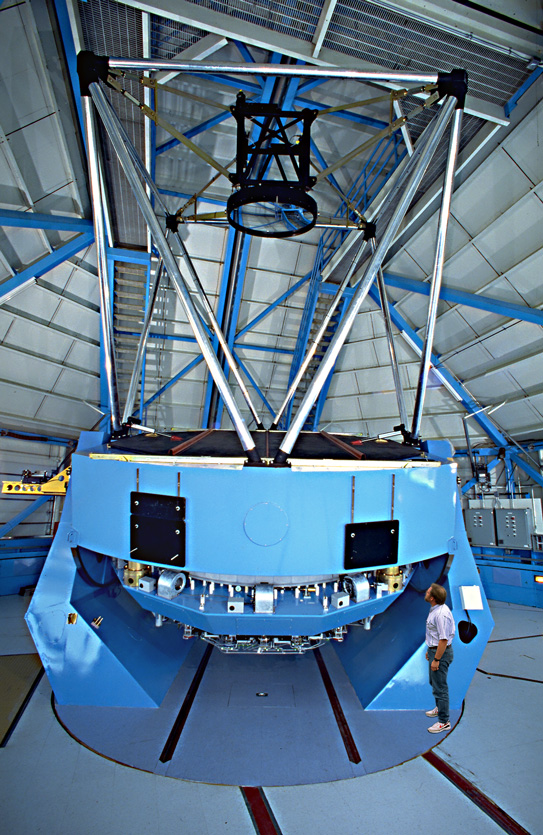
Planetary Nebula Discovery - Howell-Crisp 1 (HoCr 1)RA 06 21 41 +23 35 13February 16-18th 2009, Sydney, Australia Poster Can Be Found Here Publications of the Astronomical Society of Australia (PASA) (Submitted Oct. 5, 2009)Abstract: http://arxiv.org/abs/0910.0465 Full Research Paper: http://arxiv.org/pdf/0910.0465v1.pdf (Below Left) HoCr1 Discovery Image by Michael Howell 2/4 & 2/11/2006, TMB80/480 w/.8xFR, 3.65arcsec/pixel, 6min Subs Ha=3.75hr, SII=3hr, OIII=3hr. It was not until November of 2006 that I began working with Richard Crisp to identify this interesting object. Look for a small pink blot 1/4 way from left near the top 10th of image. (Left) RGB = Ha, SII, OIII (2nd Image) Hubble Palette (3rd) TMB 80/480 Imaging setup (4th) Canada-France-Hawaii Telescope (CFHT) Palette.
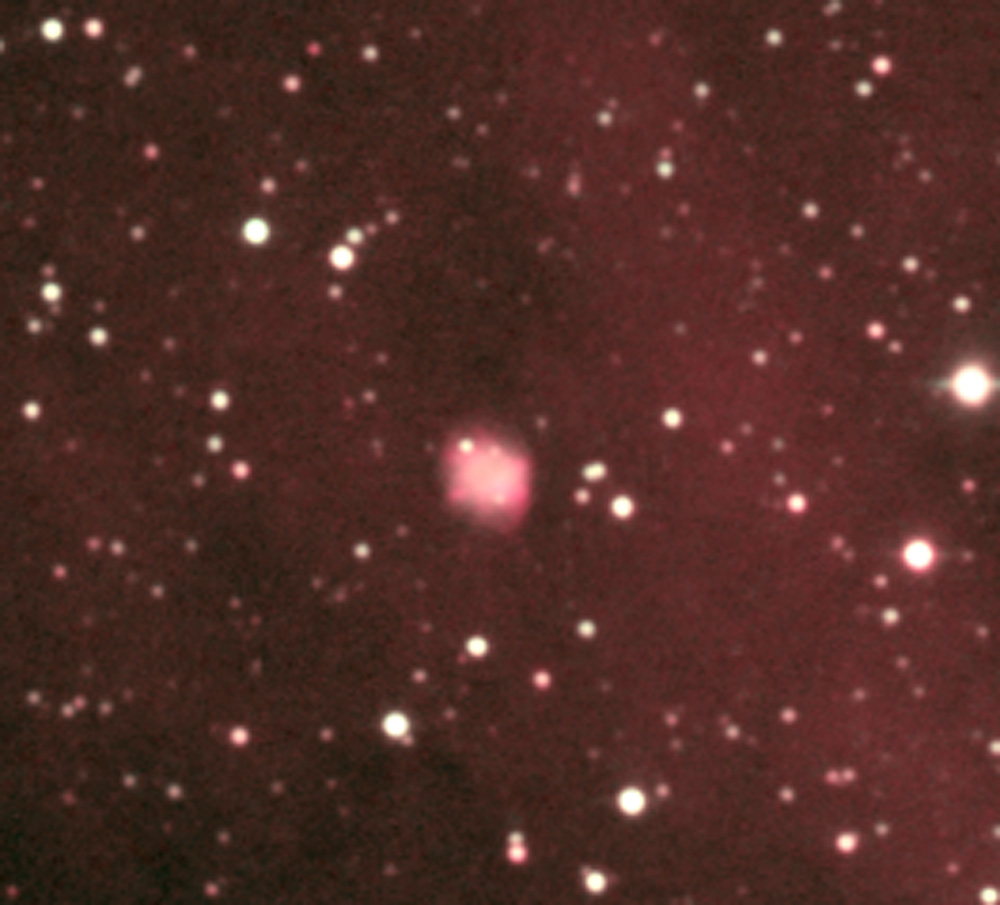
(Below) Howell-Crisp 1 (HoCr1) - 10" LX200R, f/7.3 FL1825mm, 0.77"/pixel, H-alpha (18)15m 01/04/2010. Click for FULL resolution.
H-alpha taken w/ ST-10XME, NP-127, 11/17/2006. ( Below Right) Synthetic tricolor image (15)15min H-alpha and (35)15min OIII combined as R=Ha, G=OIII, B=Ha+OIII, bin 1x1 ST-10XME on NP-127 at 2.12 arc.sec./pixel, 11/20/2006. 12.5 hours total exposure.
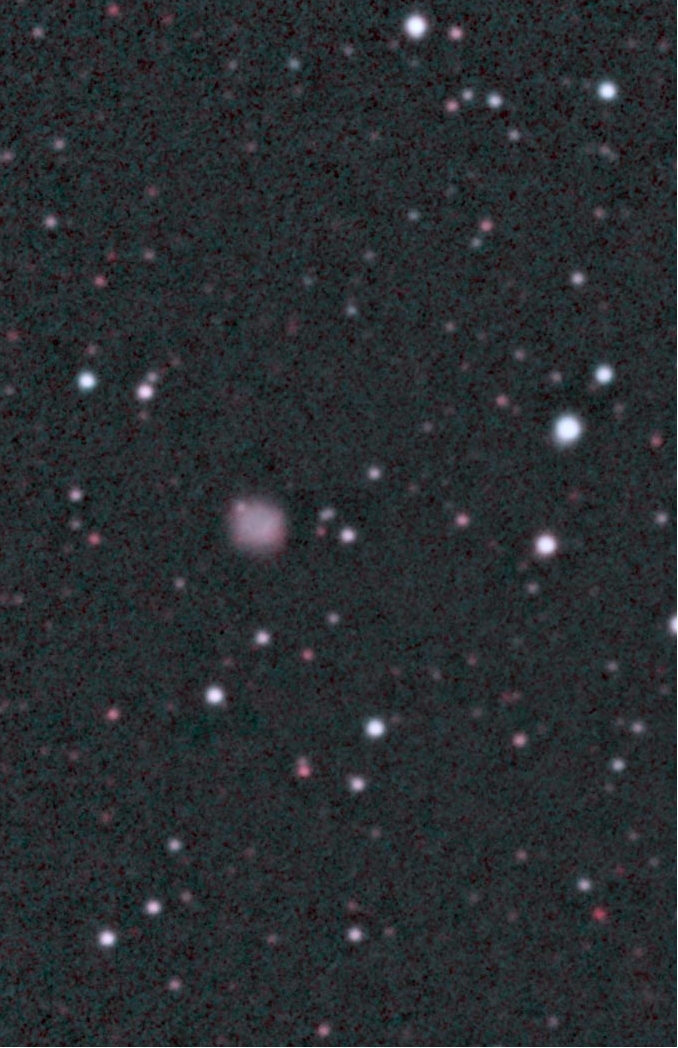
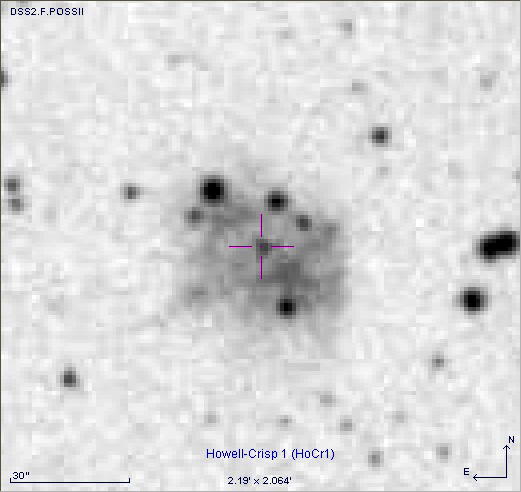
(Below Left) HoCr 1 Confirmation Image - by Richard Crisp - 6 x 20 minutes of H-alpha and [OIII] binned 2x2 using ST-10XME on RDC18" Classical Cassegrain, @ 0.84 arcsec/pixel, 11/9/2006. (Below Right) Digital Sky Survey Image courtesy of Aladin.
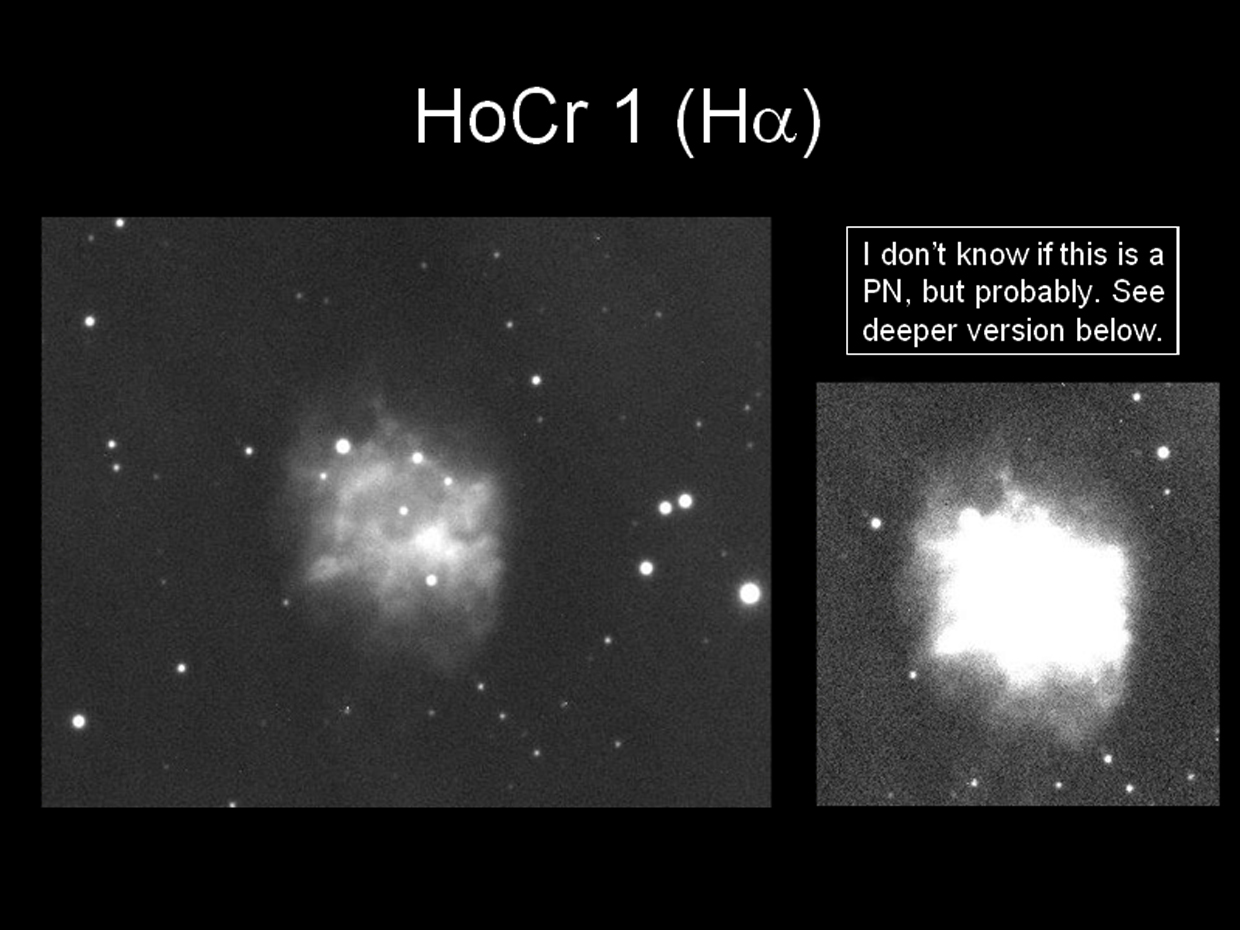
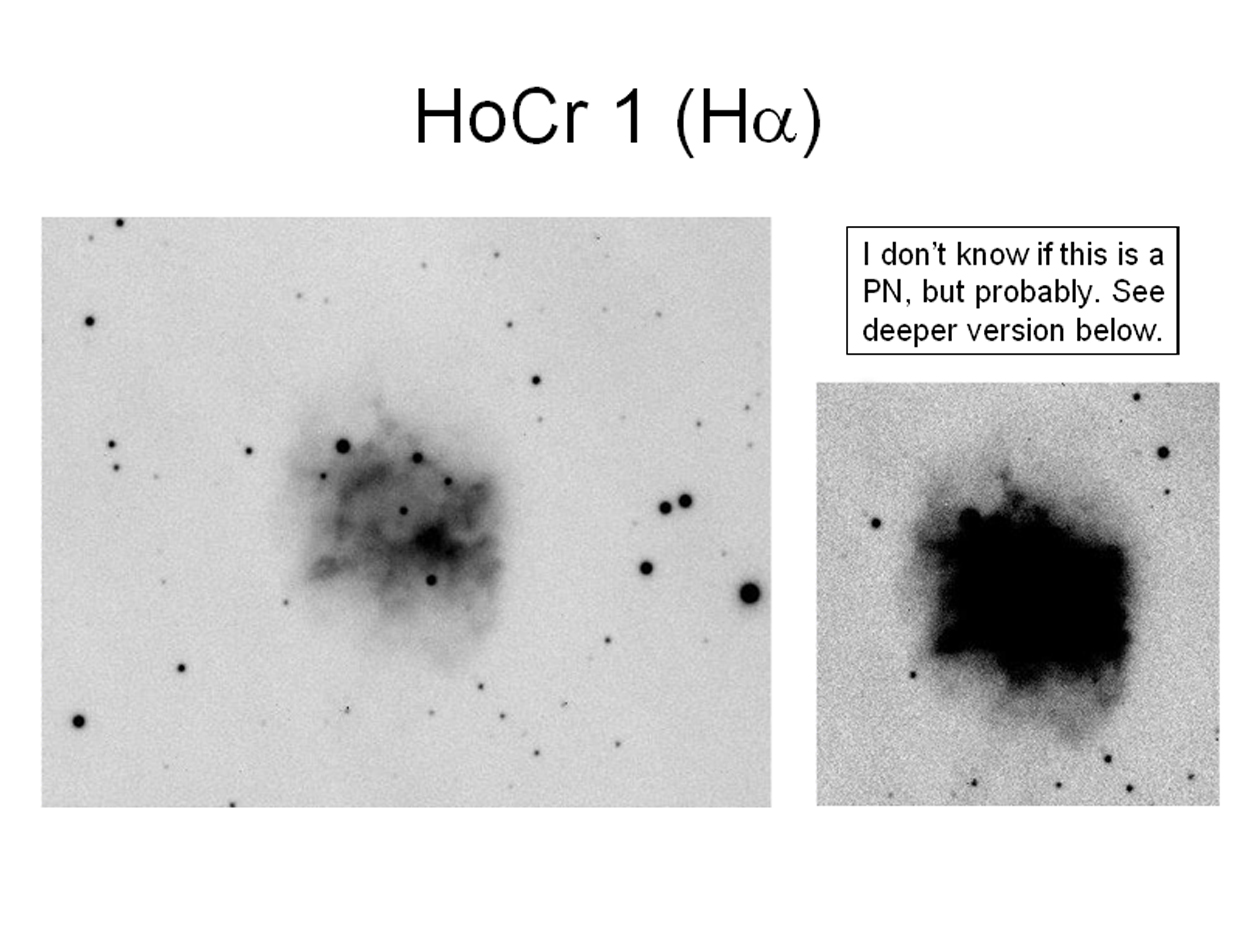
(Below) Two High Resolution Images of HoCr 1 - Courtesy of Dr. George Jacoby, Director of the WIYN Observatory 3.5 meter Telescope at Kitt Peak, Tucson, AZ. See http://arxiv.org/pdf/0910.0465v1.pdf . The WIYN Observatory (pronounced "win") is owned and operated by the WIYN Consortium, which consists of the University of Wisconsin, Indiana University, Yale University, and the National Optical Astronomy Observatory (NOAO). http://www.noao.edu/wiyn/ - The left of each image below (normal and inverted) is 300sec and the crop to the right is 600sec respectively. Both are H-alpha RAW images with no reduction/processing. Seeing was typically 0.8” and occasionally 0.45”. "Click" images to enlarge.
(Below Left) Deep H-alpha and Oxygen-III of HoCr 1 Imaged by Michael Howell - 3 3/4hours H-alpha (15)15min 1x1 ST-10XME on NP-127 at 2.12 arc.sec./pixel, 11/17/2006. (Below Right) 8 3/4hours OIII (35)15min data only. 11/20/2006.
(Below Left) RGB of Discovery Image of HoCr1, TMB80/480, ST-10XME, (5)4min, Jan-Feb. 2006 (Right) H-alpha (26)6min.
|