Horizontal Heavens
Observatory
"...From A Galaxy Far, Far
Away"
Clear Sky Chart

This page was last updated on 10/08/14.
Horizontal Heavens
Observatory
"...From A Galaxy Far, Far
Away"
|
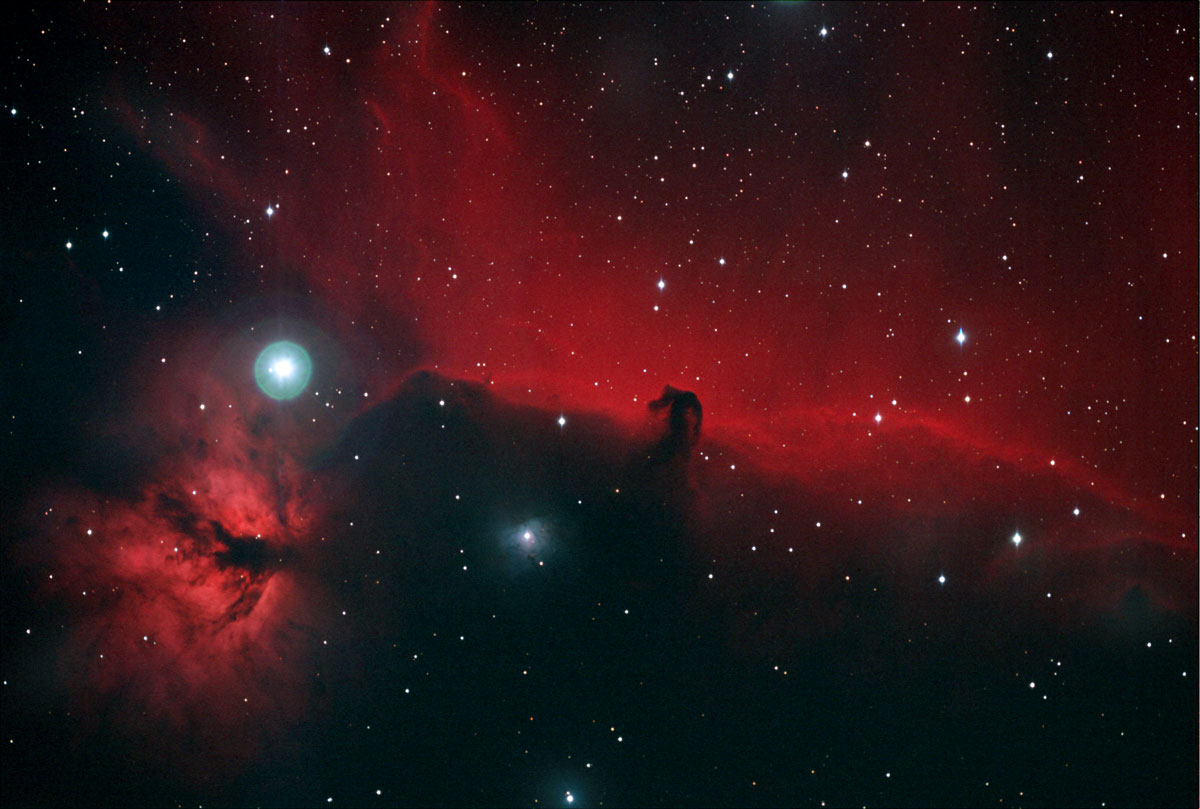
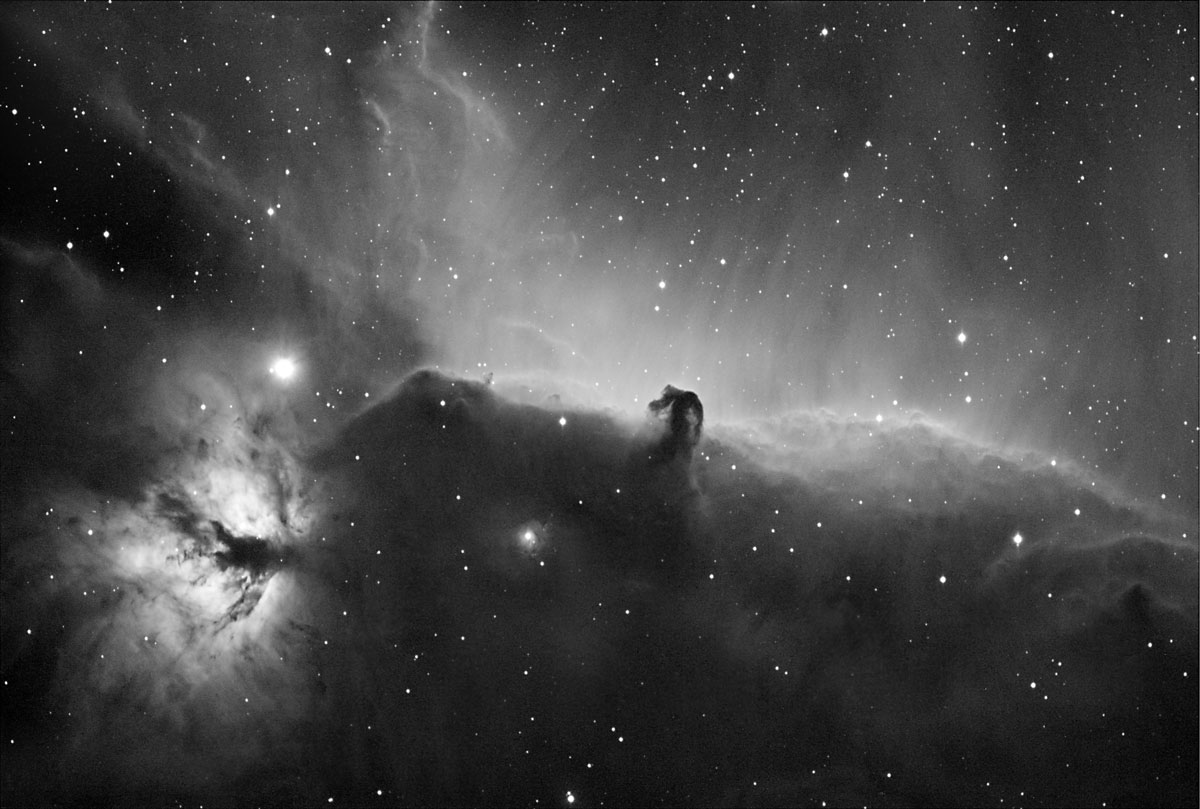
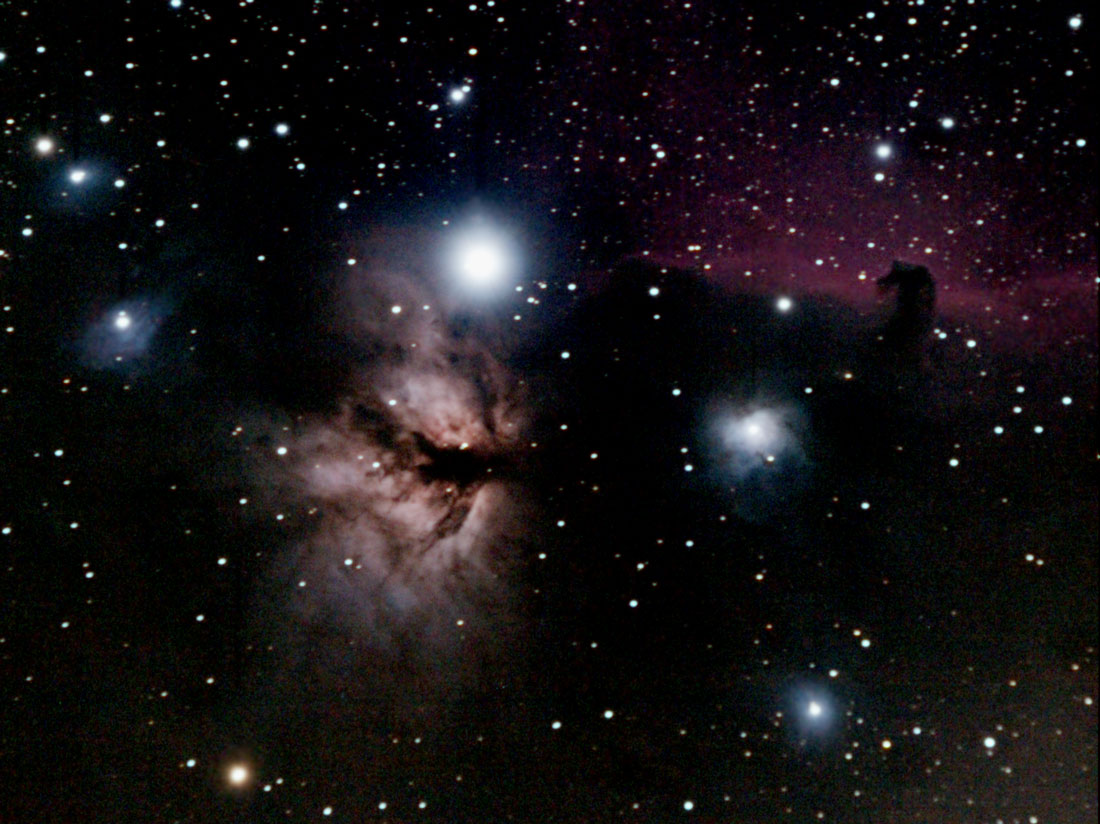
| (Below Left) NGC2024 - IC434 - ST-10XME, NP101 HaGB Ha(12)5min, GB(11)30sec, 12/21/2005. (Below Right ) NGC2024 - IC434 - ST-10XME, NP101 H-alpha (12)5min, 12/21/2005.
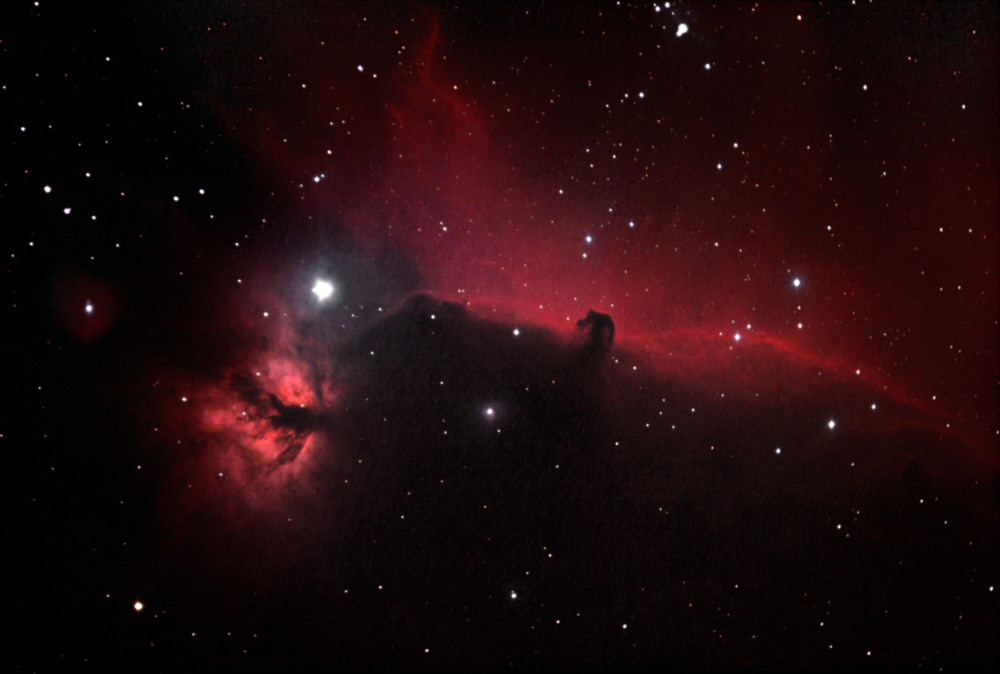
NGC2024 - IC434 - ST-10XME, 80ED w/6.3FR, (20)imin Ha, (20)30sec RGB, 10/21/2005. (Below Left ) NGC2024 - 80mm ED, (2) (5) (15) & (14) 5 min + (2) 10min ISO1600, cropped, ImagesPlus. Combination of images from 1/27, 1/28, 2/14/2004.
(Below Left & Right) NGC2024 - 80mm ED-APO, (14) 5 min ISO1600, cropped, ImagesPlus. Longer exposures bring out the Horsehead Nebula however bright stars become bloated and oversized. On the left, I used Adaptive Add and skewed coloration toward red since this was taken on Valentines Day. On the right is a more balanced view of the same image using Average Combine. 2/14/2004.
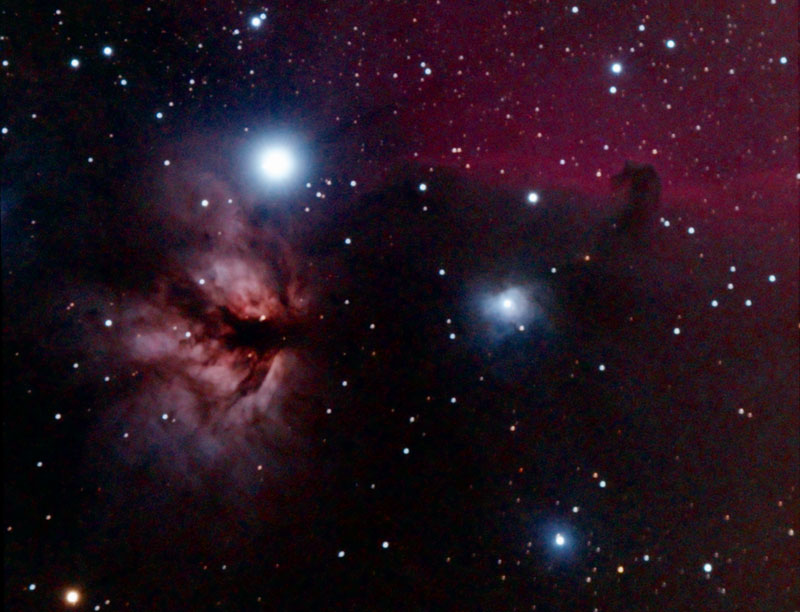
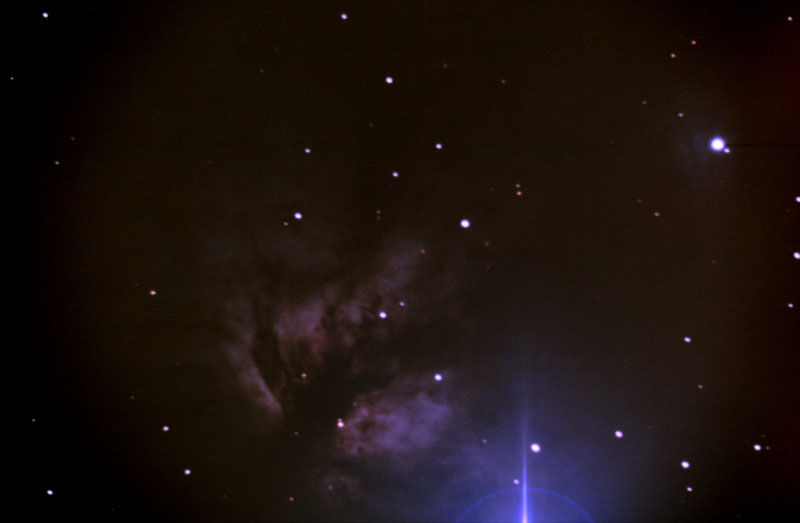
(Below Left) NGC2024 - Flame Nebula - 10" LX200 w/6.3 FR, 300D Camera, ISO1600, (best 12 of 20) at 2min, processed in Images Plus. 12/24/2003. The bright glare is caused by Alnitak (one of Orion's Belt Stars) which is just off of the image to the south.
|